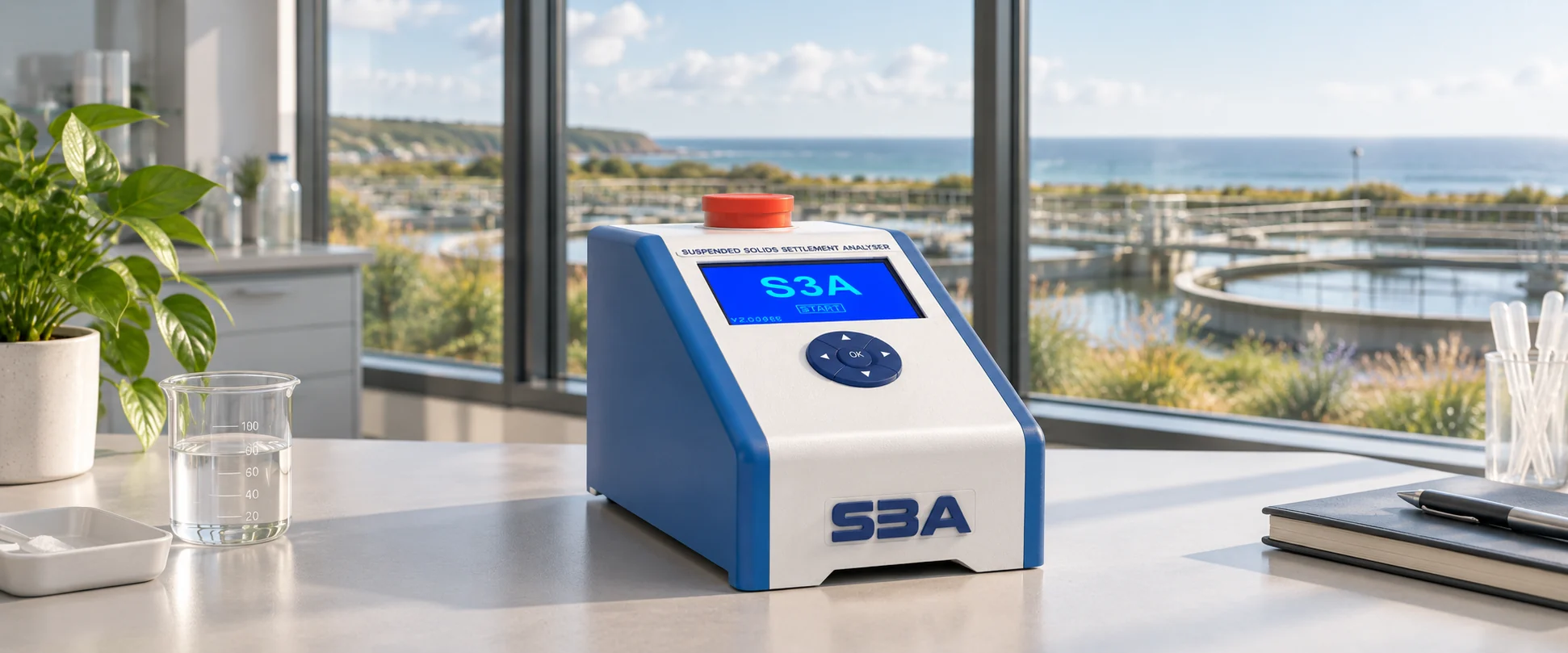
For the S3A, the core route is a representative activated-sludge sample, a rapid MLSS result and a connected settlement test. Required final-effluent testing remains a separate sampling and analytical responsibility.
Identify the process stage first
MLSS means mixed liquor suspended solids. It describes suspended-solids concentration in the mixed liquor being assessed. Record the biological sampling point so the result cannot later be mistaken for a discharge measurement.
Final-effluent TSS refers to suspended solids in the treated discharge sample. The applicable site procedure determines where, when and how that sample is taken and analysed. Do not relabel an MLSS result as final-effluent TSS because both are expressed in mg/L.
Match the instrument to the task
The S3A uses a 210 ml sample and provides MLSS in approximately 10 seconds within its specified 50 to 5,500 mg/L range, with stated accuracy of ±10%. It then continues the 30-minute settlement cycle.
That workflow provides sample-based operational information. It is not continuous online discharge monitoring. Instrument selection should consider the actual sample, expected range, required method and monitoring purpose rather than the phrase “suspended solids” alone.
Keep a clear measurement-point record
Name the treatment stage and exact sampling point
State whether the purpose is process monitoring or required discharge testing
Record the sample collection time and method
Retain the result name and units, not just a number
Identify the instrument or analytical procedure used
Keep operational records distinct from compliance reports
Do not substitute a settlement observation for discharge analysis
SVI, settled sludge level, supernatant clarity and floating sludge describe aspects of how the sampled mixed liquor settles. None of those labels converts the sample into a final-effluent compliance result.
Review connected S3A outputs using the treatment works’ own process-control procedure. Continue required laboratory analysis, permit sampling and regulatory reporting using the methods that apply to the site.
Follow the relevant S3A route
Read the MLSS parameter guide for the biological-stage measurement and the suspended solids analyser guide for instrument roles.
The portable versus online comparison explains the monitoring boundary. Contact PMA with the sample point, expected concentration and monitoring purpose before specifying the S3A.