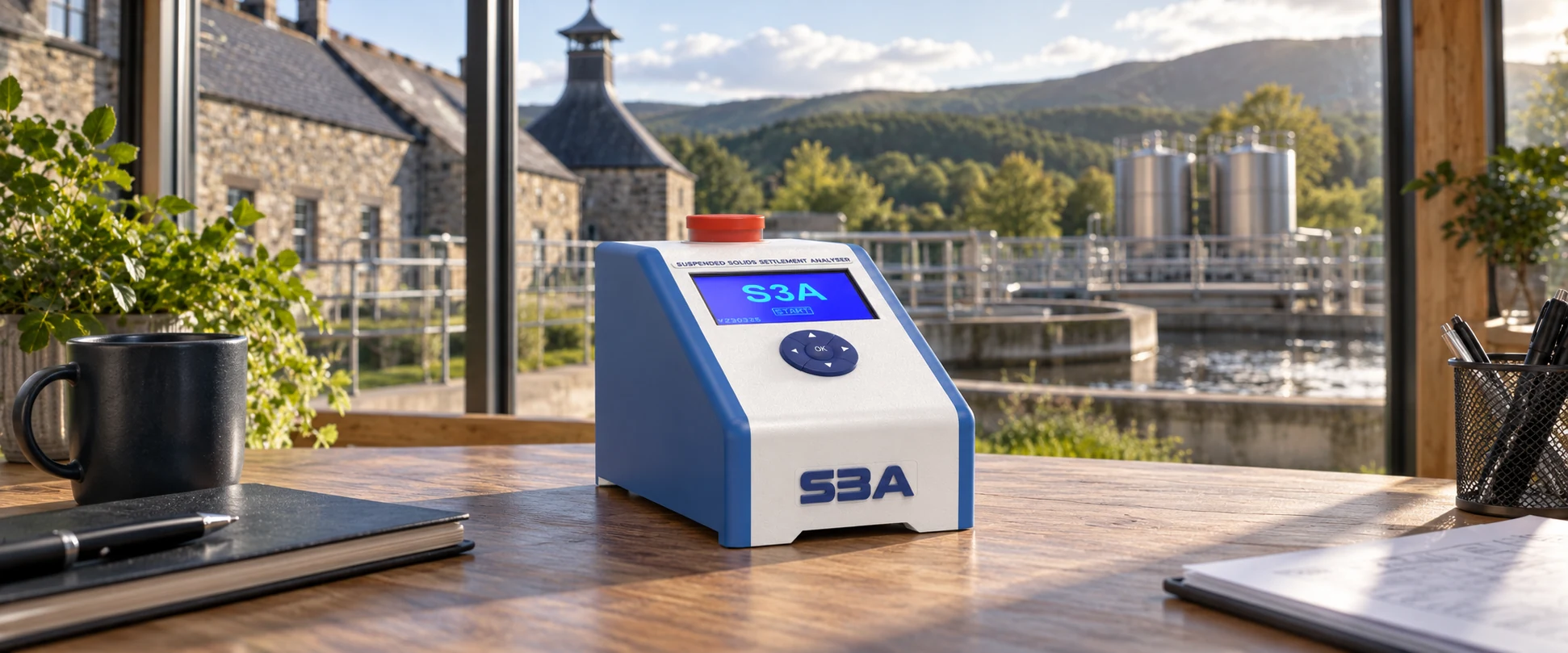
This guidance applies where the distillery uses suitable activated-sludge treatment. It is not a claim that every distillery has that process or that a particular company uses the S3A.
Start with the treatment stage and safe working area
Use the sampling point agreed in the site procedure. Distinguish representative mixed liquor from raw production wastewater and final discharge samples. A shared industry label does not make these different samples interchangeable.
The S3A is intended for safe-area use, not hazardous production areas. Confirm the proposed location and sample suitability with the responsible site team before adopting the routine.
Record context without assuming a cause
Keep relevant production, cleaning and treatment observations beside the sample record. Use actual site information rather than assuming that a result changed because a cleaning cycle occurred. The timing of two events alone does not establish a process diagnosis.
Biological-stage sampling point and collection time
Treatment operating phase, where relevant
Relevant production or cleaning context recorded by the site
Any departure from the normal sampling or test procedure
Stirred or unstirred settlement method
The completed result and the person responsible for review
Retain connected concentration and separation evidence
The S3A measures MLSS from a representative 210 ml sample in approximately 10 seconds and continues a 30-minute settlement cycle. Retain SVI, settled sludge level, supernatant clarity and floating-sludge results alongside MLSS.
Confirm that the expected mixed-liquor concentration fits the specified 50 to 6,500 mg/L range. The stated MLSS accuracy is ±10%. For unusual or highly variable samples, request an application review rather than treating an out-of-range reading as a valid trend point.
Keep methods and compliance obligations separate
The optional stirrer enables SSVI and stirred settled sludge level. Identify those results clearly and avoid combining them with unstirred SVI as though the method had not changed.
An S3A result is operational evidence about the sampled mixed liquor. It is not a COD/BOD result, an online discharge measurement or a substitute for permit sampling and laboratory analysis. Any operational response should follow the treatment plant’s own review procedure.
Review the application before specifying the analyser
Read the distillery wastewater application and the SVI versus SSVI comparison for the relevant boundaries.
The S3A product page sets out the specification. Contact PMA with the treatment process, sample range and intended test method to discuss suitability.