Use clarity with MLSS, SVI, settled sludge level and floating-sludge observations. A clear or cloudy appearance is useful as a consistent trend, but it does not identify the cause of a process change by itself.
What does supernatant clarity show?
During a settlement test, solids separate from the liquid at different rates. The appearance of the supernatant shows whether visible floc or dispersed material remains above the main settled layer at the observation time.
US EPA guidance explains that two samples can have similar 30-minute settling figures but different liquid clarity. It recommends observing whether sludge settles uniformly and leaves clear liquid or whether particles settle through a cloudy liquid.
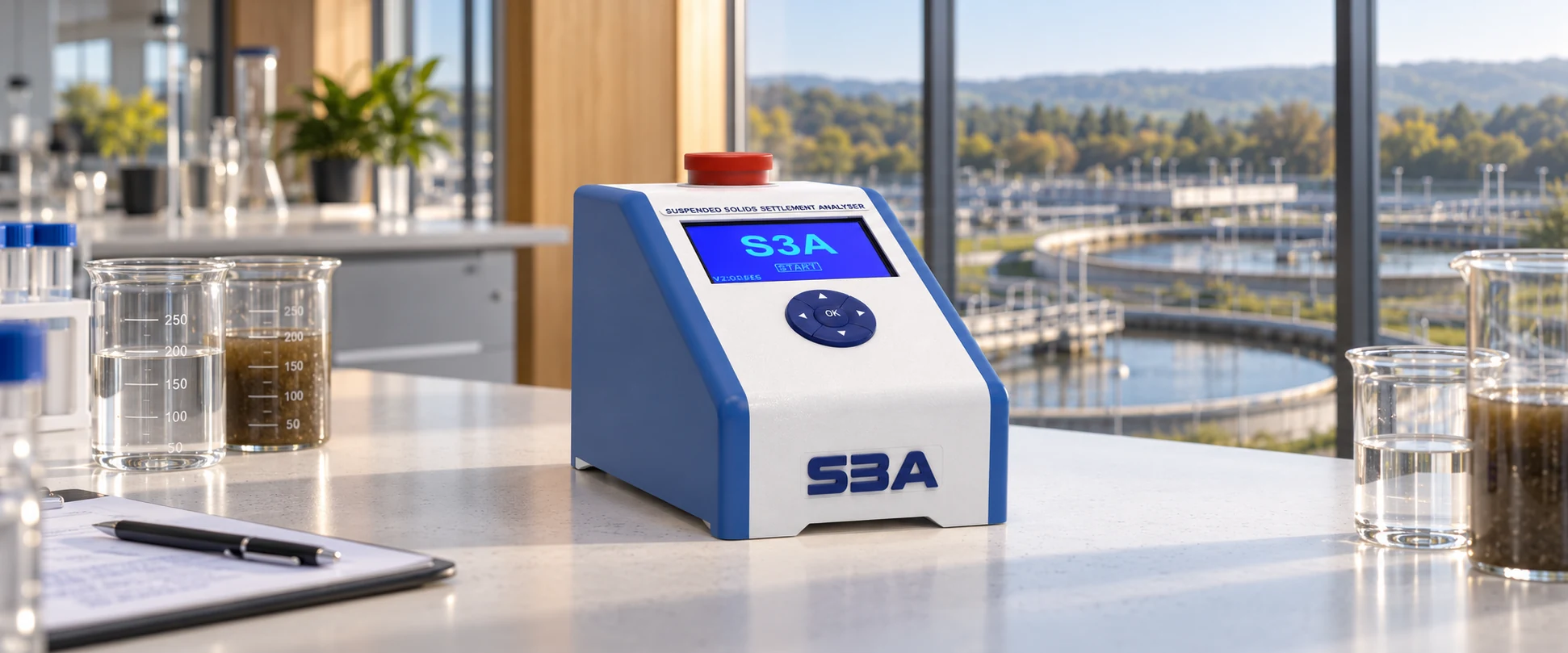
The S3A records supernatant clarity as part of the same 30-minute cycle that produces MLSS, SVI, settled sludge level and floating-sludge results.
Build a repeatable clarity observation
1. Start with a representative sample
Use the agreed sampling point and prepare the sample consistently. Surface scum, stagnant pockets and unusual cycle timing can make the sample unrepresentative of the mixed liquor being assessed.
2. Keep the observation time fixed
Compare clarity at the same defined point in the test. A sample can continue to clarify after the 30-minute reading, so observations made at different times should not be combined into one trend.
3. Use consistent viewing conditions
Keep the tube, background and lighting approach consistent where practical. The purpose is not to create a laboratory compliance result, but to make routine visual comparisons less subjective.
4. Use an agreed description or scale
Define how the site records clear, slightly cloudy or cloudy conditions, or use the analyser output consistently. Avoid changing the wording or threshold without documenting the change.
5. Describe what remains in the liquid
Note whether the supernatant contains fine dispersed material, isolated floc or material moving up from the settled layer. Different appearances warrant different follow-up evidence.
6. Review the wider process context
Compare the observation with the established site trend, sampling conditions and other process-control results. Clarity is evidence of separation behaviour, not a standalone diagnosis.
What can cloudy supernatant prompt you to check?
Whether the sample and tube were prepared consistently
Whether the full observation period was completed
Fine or dispersed solids remaining above the settled layer
Slowly settling or weak floc that is not represented by settled volume alone
Floating material or gas-related movement through the supernatant
Changes in MLSS, SVI or settled sludge level from the same sample
Differences between stirred and unstirred test methods
The need for microscopy, laboratory work or wider process investigation where site procedure requires it
How the S3A supports clarity trending
The S3A uses a representative 210 ml sample and provides an MLSS result in approximately 10 seconds before continuing the unattended settlement test.
After 30 minutes, the recorded result includes SVI, settled sludge level, supernatant clarity and floating sludge. Results can be stored by date, time and one of three locations.
The clarity result supports operational comparison. It is not a final-effluent compliance measurement and does not replace the approved sampling and laboratory method required by the site.
Similar SVI does not guarantee similar clarity
SVI relates settled volume to MLSS, while supernatant clarity describes what remains visible in the liquid above the sludge. Both can change independently, so retain both in the review.
Use the Supernatant Clarity parameter guide for the measurement role. If surface solids are present, continue with the floating-sludge observation guide.
Connect clarity to the complete settlement result
The SVI guide explains the volume-to-mass index, while the SV30 vs SVI guide separates raw settled volume from the normalised result.
For the complete operational route, use the activated-sludge monitoring guide and the S3A parameter directory.
Authoritative references
US EPA process-control guidance describes observing supernatant clarity, floc movement, settling and compaction during the 30-minute test.
US EPA Activated Sludge Process Control includes supernatant clarity within settleometer analysis and wider troubleshooting evidence.
For help reviewing an S3A application, contact PMA. Interpret results using the treatment works own procedures and competent process advice.